
Preparing Financial Records for a Business Loan
Applying for business financing often involves more than filling out an application and explaining how the funds will be used. Lenders may also want a clear picture of the financial condition of the business before making a lending decision.
That means your bookkeeping records matter.
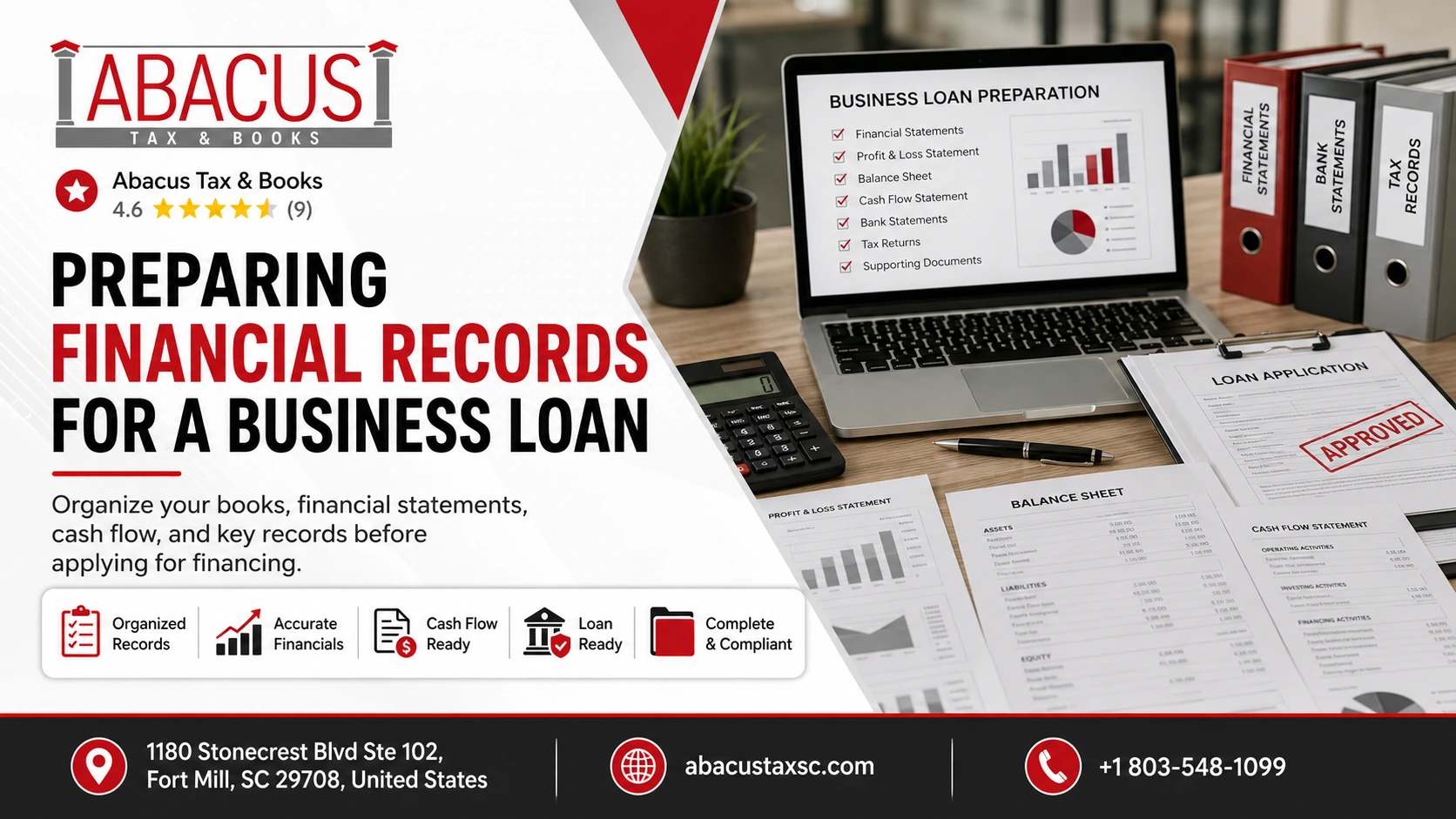
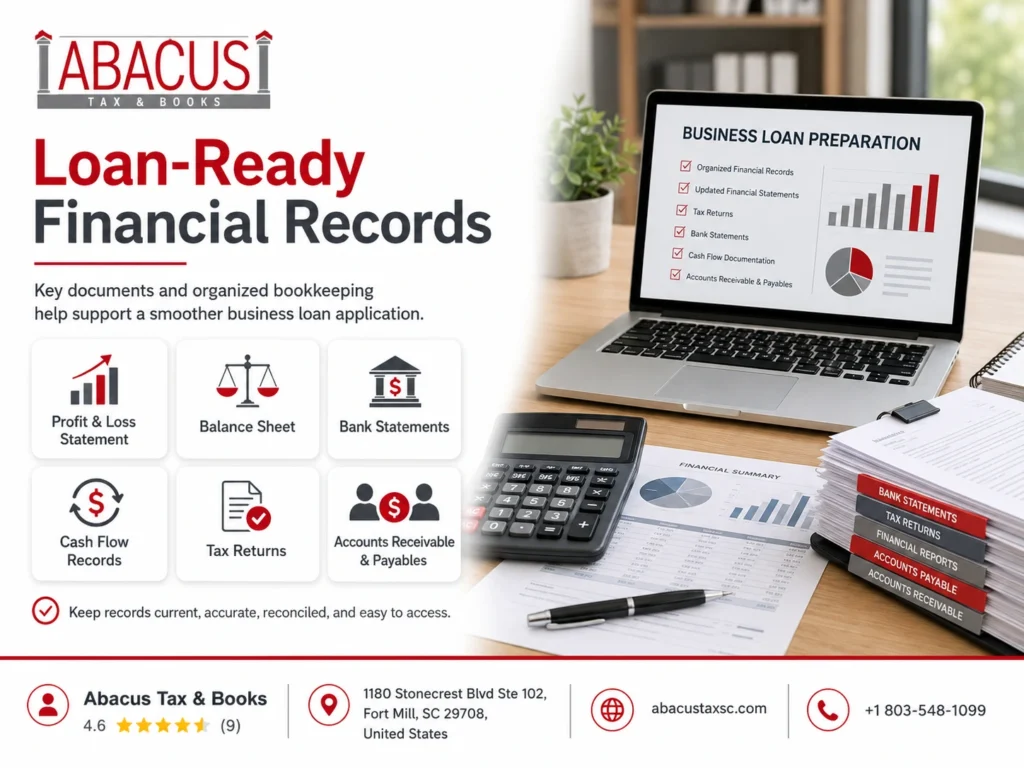
The financial records needed for a business loan can vary depending on the lender, loan type, amount requested, length of time in business, and other factors. However, many lenders review similar categories of information, including profit and loss statements, balance sheets, bank statements, tax returns, cash flow information, accounts receivable, accounts payable, and existing debt.
Having organized, accurate, and current records can make it easier to provide requested information and answer financial questions during the application process.
At Abacus Tax & Books, we help small-business owners keep their books organized so financial information is easier to access when opportunities such as financing arise.
Why Do Lenders Review Business Financial Records?
Lenders review financial records because they want to understand the financial position and repayment capacity of the business.
A loan creates a new financial obligation. Before approving financing, a lender may want to evaluate whether the business appears capable of making scheduled payments while continuing to cover normal operating expenses.
Financial records can help lenders assess areas such as:
- Revenue stability
- Profitability
- Cash flow
- Existing debt
- Current financial obligations
- Available assets
- Business liquidity
- Customer receivables
- Vendor obligations
- Historical financial performance
Lenders may also compare different records to see whether the financial information is consistent.
For example, reported revenue, bank deposits, bookkeeping records, and tax filings may all provide different pieces of the same financial picture.
This is one reason accurate bookkeeping is important before applying for financing. The goal is not to make the business appear stronger than it is. The goal is to provide complete and reliable information that represents the business accurately.
Loan approval still depends on the lender’s requirements and the company’s overall financial profile.
What Financial Documents Are Commonly Needed for a Business Loan?
There is no universal list of documents required for every business loan.
Requirements may depend on:
- The lender
- Loan amount
- Loan purpose
- Business age
- Industry
- Business structure
- Financial history
- Type of financing requested
That said, small-business owners may be asked to provide some combination of the following:
- Profit and loss statements
- Balance sheets
- Cash flow information
- Business bank statements
- Business tax returns
- Accounts receivable reports
- Accounts payable reports
- Debt schedules
- Existing loan information
- Current-year financial statements
- Historical financial statements
A lender may request multiple years of information for an established company or more recent records for a younger business.
Some may also request supporting documentation for specific accounts or transactions.
For example, if a balance sheet shows a large loan balance, a lender may request information about the outstanding debt and monthly payment obligation.
The important point is to be prepared to provide records that are current, organized, and supported by the underlying bookkeeping.
Which Financial Statements May a Lender Request?
Several financial statements may be used during a loan review.
The two most commonly discussed are the profit and loss statement and balance sheet, although cash flow information may also be important.
Profit and Loss Statement
A profit and loss statement, sometimes called an income statement, summarizes the company’s revenue and expenses over a specific period.
It helps show whether the business generated a profit or loss during that period.
Balance Sheet
A balance sheet shows the company’s financial position at a particular point in time.
It generally includes:
- Assets
- Liabilities
- Equity
This can help a lender understand what the business owns, what it owes, and its overall financial structure.
Cash Flow Information
Cash flow information helps show how cash moves into and out of the business.
A business may report a profit but still experience difficulty covering payments if cash is tied up in unpaid invoices or other obligations.
Depending on the application, a lender may request current-year reports, year-end statements, or comparisons covering multiple periods.
These reports should generally be based on complete and reconciled bookkeeping records.
Why Are Profit and Loss Statements Important for a Loan Application?
A profit and loss statement provides a summary of how the business has performed financially over a period of time.
It typically shows:
- Revenue
- Cost of goods or direct costs, when applicable
- Gross profit
- Operating expenses
- Net profit or loss
Lenders may use this information to evaluate whether the company is consistently generating enough income to support its operations and potentially take on additional debt.
For example, a lender may look at whether:
- Revenue is growing or declining
- Profitability is stable
- Expenses are increasing rapidly
- The business experiences strong seasonal changes
- Profit margins appear consistent over time
A single profitable month may not provide enough context.
A lender may want to review year-to-date performance, prior-year results, or several years of historical statements.
The accuracy of the profit and loss statement matters as well.
If transactions have not been entered or expenses have been categorized inconsistently, the report may not provide a reliable picture of performance.
Before submitting a profit and loss statement, business owners should make sure the underlying books are complete and current.
How Do Balance Sheets Help Lenders Evaluate a Business?
The balance sheet provides a different perspective from the profit and loss statement.
While the profit and loss statement shows performance over a period, the balance sheet shows the company’s financial position at a specific point in time.
It may include assets such as:
- Cash
- Accounts receivable
- Inventory
- Equipment
- Vehicles
- Property
Liabilities may include:
- Accounts payable
- Credit card balances
- Business loans
- Lines of credit
- Other outstanding obligations
The equity section represents the owners’ financial interest in the business based on the accounting records.
Lenders may review a balance sheet to understand:
- How much cash the business has
- How much customers owe the business
- Existing debt obligations
- Short-term liabilities
- Major business assets
- Overall financial leverage
- Available working capital
A balance sheet can also reveal bookkeeping issues.
For example, unexplained negative balances, outdated loan accounts, incorrect credit card balances, or unusually old receivables may prompt questions.
This is why balance sheet accounts should be reviewed periodically rather than only when a loan application is underway.
What Bank and Cash Flow Records May Be Required?
Business bank statements are frequently used to help verify financial activity.
A lender may request statements covering several recent months or a longer period depending on its requirements.
Bank statements can help provide insight into:
- Deposits
- Cash balances
- Payment activity
- Overdrafts
- Recurring obligations
- General cash movement
Lenders may compare bank activity with financial statements or bookkeeping records.
That makes regular bank reconciliation especially important.
A bank reconciliation compares transactions recorded in the bookkeeping system with the activity reported by the bank. It helps identify:
- Missing transactions
- Duplicate entries
- Recording errors
- Outstanding payments
- Unrecorded fees
- Incorrect balances
Cash flow may also receive close attention because debt payments must ultimately be made with available cash.
A profitable company may still experience cash shortages if customers pay slowly, expenses come due before receivables are collected, or large purchases reduce available cash.
For this reason, lenders may consider both profitability and cash availability when reviewing a business.
What Do Lenders Look for in Business Financial Records?
Each lender has its own underwriting standards, but financial records are often reviewed for several broad characteristics.
Consistency
Lenders may look for consistency across reports, bank activity, and tax filings.
Major unexplained differences may lead to additional questions.
Current Information
Old financial statements may not accurately reflect the current condition of the business.
Lenders often want recent information, particularly if the application is being made well into the current year.
Complete Records
Missing transactions can distort financial statements.
All known revenue, expenses, loans, payments, and other business activity should be properly recorded.
Accurate Categorization
Transactions should be assigned to appropriate accounts so financial statements reflect the nature of the activity.
Profitability
A lender may evaluate whether the business has demonstrated an ability to generate earnings.
Cash Flow
The lender may also consider whether cash generation appears sufficient to support operating expenses and additional debt obligations.
Debt
Existing loans, credit lines, and other liabilities can affect a company’s overall borrowing capacity.
Receivables and Payables
Large outstanding customer balances or significant unpaid vendor bills may affect the financial picture.
There is no single metric that guarantees approval. Lenders typically evaluate financial records as part of a broader underwriting process.
What Financial Record Problems Can Delay a Loan Application?
Disorganized books can create delays when a lender requests documentation.
Common problems include:
Missing Transactions
If bank or credit card activity has not been entered into the accounting system, financial reports may be incomplete.
Unreconciled Bank Accounts
If bookkeeping balances do not match bank balances, reports may contain errors that require investigation.
Outdated Financial Reports
Reports generated from books that have not been updated in several months may not accurately reflect the company’s current position.
Duplicate Transactions
Duplicate expenses or deposits can distort profitability and account balances.
Inconsistent Categorization
Recording similar transactions under different accounts can make financial statements harder to interpret.
Mixing Personal and Business Finances
Personal transactions running through business accounts can complicate bookkeeping and make the financial activity more difficult to explain.
Incorrect Loan Balances
Loan accounts that have not been updated for principal payments can result in inaccurate liabilities on the balance sheet.
Unexplained Accounts
Large balances in categories such as “Miscellaneous,” “Ask My Accountant,” or uncategorized income and expenses may require additional review.
Old Accounts Receivable
Invoices that have remained outstanding for a long period may not have the same financial value as recently issued invoices.
Resolving these problems before submitting loan documentation can make the financial information easier to understand and support.
How Should You Prepare Your Books Before Applying for Financing?
Preparing financial records before applying for a business loan should focus on accuracy, completeness, and organization.
A practical review may include the following steps.
Record All Recent Transactions
Make sure business income, expenses, transfers, loan payments, and other transactions are entered.
Leaving recent activity unrecorded can cause reports to understate or overstate financial performance.
Reconcile Bank Accounts
Each business bank account should be reconciled to the corresponding bank statement.
This confirms that the accounting records align with actual bank activity.
Reconcile Credit Cards
Business credit card balances should also be reviewed and reconciled.
Review Accounts Receivable
Confirm that outstanding customer invoices are accurate.
Payments that have already been received should not continue appearing as unpaid.
Review Accounts Payable
Make sure unpaid vendor bills and other obligations are current and correctly recorded.
Verify Loan Balances
Compare outstanding loan balances in the books with recent lender statements when available.
Review Financial Statements
Examine the profit and loss statement and balance sheet for unusual or unexplained balances.
Look for:
- Negative balances that do not make sense
- Duplicate accounts
- Large miscellaneous amounts
- Unexpected income or expense changes
- Old receivables
- Incorrect debt balances
Keep Personal and Business Activity Separate
Business records should clearly reflect business activity.
If personal transactions have entered the business books, they should be handled correctly rather than simply hidden or deleted.
Make Sure Reports Are Current
Generate updated financial reports after the books have been reviewed and reconciled.
The purpose of cleanup is not to change the financial story of the business. Financial information provided to a lender should remain accurate and transparent.
The objective is simply to make sure the records correctly reflect what actually occurred.
When Can a Bookkeeper Help With Business Loan Preparation?
A bookkeeper can be especially helpful when financial information needs to be brought up to date before a loan application.
This may include situations where:
- Several months of transactions have not been recorded
- Bank reconciliations are incomplete
- Credit card balances do not match
- Accounts receivable needs review
- Accounts payable information is outdated
- Financial statements contain unclear balances
- Loan balances have not been updated
- Personal and business transactions have been mixed
- Reports need to be prepared from current books
A bookkeeper can help organize the underlying records so requested reports are based on accurate information.
They can also help identify problems before documents are provided to a lender.
For example, if a business owner’s balance sheet shows a loan that was paid off six months ago, resolving that issue before submitting the report can prevent unnecessary confusion.
At Abacus Tax & Books, we help small businesses maintain organized bookkeeping records and prepare current financial reports so important business information is easier to access when financing opportunities arise.
Good bookkeeping cannot guarantee loan approval. It can, however, make it much easier to present clear and reliable financial information during the application process.
FAQs
What financial records are usually needed for a business loan?
Requirements vary, but lenders may request profit and loss statements, balance sheets, bank statements, tax returns, cash flow information, accounts receivable reports, accounts payable details, and schedules of existing debt.
Will I need to provide business tax returns?
Many lenders request business tax returns as part of the application process, although requirements depend on the lender and type of financing. They may use tax filings alongside current financial statements to review historical financial performance.
How recent should financial statements be?
This depends on lender requirements. Many lenders want financial statements that reflect the current year in addition to historical records. If your bookkeeping is several months behind, updating it before applying can make it easier to provide current information.
Do bank accounts need to be reconciled before applying?
Reconciled accounts can improve the reliability of financial statements because bookkeeping balances have been compared with bank activity. Unreconciled accounts may contain missing or duplicate transactions that affect financial reports.
Why do lenders review cash flow?
Loan payments require available cash. Cash flow information can help a lender understand whether the business appears capable of meeting current operating obligations while also taking on additional payments.
What should I do if my books are disorganized?
Start by making sure transactions are complete, reconciling bank and credit card accounts, reviewing receivables and payables, verifying debt balances, and checking financial reports for unusual amounts. If the records are significantly behind or complicated, professional bookkeeping support may be useful.
Can correcting my books before applying improve my chances of approval?
Accurate records can make the financial picture clearer and reduce confusion during the application process, but they do not guarantee approval. Lending decisions depend on the lender’s criteria and the overall financial profile of the business.
When should I involve a bookkeeper in preparing for a business loan?
Consider involving a bookkeeper before applying if financial records are behind, accounts have not been reconciled, balances are unclear, or current financial statements are not readily available. Preparing in advance can be easier than trying to resolve bookkeeping problems after a lender begins requesting documents.
Get Your Financial Records Loan-Ready With Abacus Tax & Books
Financing opportunities can move quickly, and searching for missing transactions or trying to reconcile months of financial activity during an application can create unnecessary stress.
Keeping your bookkeeping current gives you faster access to the reports and supporting records lenders may request.
Before applying for financing, review your profit and loss statement, balance sheet, bank reconciliations, cash flow information, receivables, payables, and outstanding debt. Make sure the information is complete, current, and consistent with the underlying records.
At Abacus Tax & Books, we help small-business owners organize their bookkeeping and prepare reliable financial reports that make it easier to respond to financial-document requests.
Contact Abacus Tax & Books to learn more about our bookkeeping and financial reporting services and how we can help you prepare clear, organized financial records before a business loan application.