
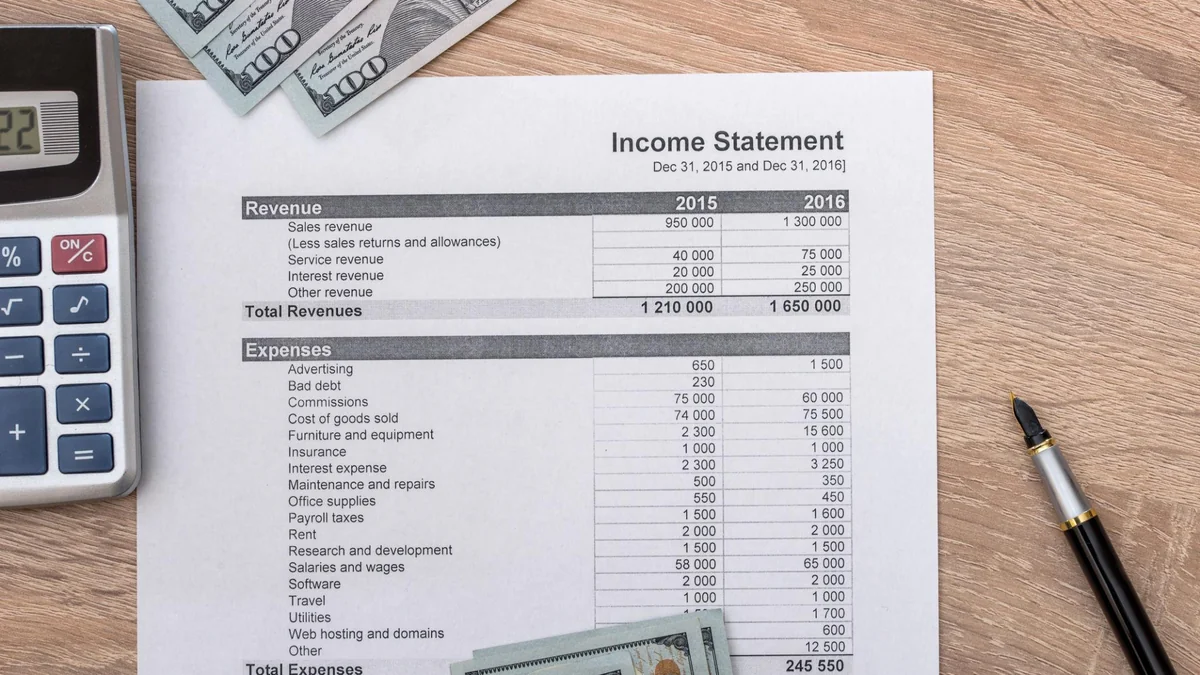
How to Read an Income Statement
A business can generate impressive sales and still struggle to make money. Customers may be buying, invoices may be going out, and daily operations may seem busy. Yet after paying suppliers, employees, rent, and other expenses, there might be surprisingly little profit left.
That is why understanding how to read an income statement is so important.
An income statement helps small business owners see how much money their company earns, how much it spends, and whether its operations are producing a profit or loss. Rather than focusing only on sales, the report reveals what happens to revenue after expenses are accounted for.
The good news is that business owners do not need advanced accounting knowledge to understand the basics. Once the main sections become familiar, an income statement can provide useful insights into everyday business performance.
Quick Answer: What Does an Income Statement Show?
An income statement is a financial report that summarizes a business’s revenue, expenses, and profit or loss over a specific period. It shows how much the business earned, what it cost to generate that revenue, and how much remained after expenses. Business owners use it to evaluate profitability and identify financial trends.
An income statement is also commonly called a profit and loss statement or P&L statement.
Unlike a balance sheet, which shows a company’s financial position on a particular date, an income statement measures financial performance over time.
For example, an income statement might cover:
- One month, such as January 1 through January 31
- One quarter, such as April through June
- An entire calendar or fiscal year
Each period gives business owners a different perspective.
A monthly income statement can help identify recent changes, while an annual report can show whether the company is becoming more profitable over time.
The main question an income statement answers is simple:
Is the business earning more than it spends?
However, the report goes further by showing where revenue comes from, which expenses affect profitability, and how much profit remains.
What Is Revenue on an Income Statement?
Revenue is the money a business earns from selling products or providing services before subtracting expenses.
It usually appears near the top of the income statement because it provides the starting point for calculating profitability.
For example, imagine a small landscaping company in Fort Mill that provides lawn maintenance, landscaping installations, and seasonal cleanup services.
During one month, the company records:
| Revenue Source | Amount |
| Lawn maintenance services | $18,000 |
| Landscape installations | $12,000 |
| Seasonal cleanup services | $5,000 |
| Total revenue | $35,000 |
The business generated $35,000 in total revenue for the month.
However, this does not mean the owner earned $35,000 in profit.
The company still needs to pay for materials, labor, equipment expenses, insurance, and other operating costs.
Revenue Is Not Always the Same as Cash Received
One important concept when learning how to read an income statement is understanding that revenue and cash are not necessarily the same.
Under accrual accounting, revenue is generally recorded when earned, even if the customer has not paid yet.
For example, a contractor may complete a $4,000 project in March but receive payment in April.
The revenue would generally appear on the March income statement because that is when the work was completed.
Under cash-basis accounting, revenue generally appears when payment is received.
The accounting method matters when interpreting financial reports.
Does Higher Revenue Always Mean Better Performance?
Not necessarily.
A business might increase revenue by 20% while expenses increase by 35%.
Although sales improved, profitability could decline.
That is why revenue should always be reviewed alongside the costs associated with generating it.
What Is Cost of Goods Sold?
Cost of goods sold, commonly called COGS, represents the direct costs associated with producing or purchasing the goods a business sells.
For service-based companies, similar direct costs may be presented as cost of services or cost of revenue.
These costs are different from general business expenses because they are directly connected to delivering products or services.
Common Examples of Cost of Goods Sold
Depending on the business, direct costs may include:
- Materials used to manufacture products
- Inventory purchased for resale
- Direct production labor
- Supplies consumed while performing services
- Certain subcontractor expenses directly associated with customer projects
- Freight-in or other qualifying product acquisition costs
For example, a company selling custom cabinets might include wood, hardware, and direct manufacturing labor in its cost of goods sold.
Office rent and general advertising expenses, however, would usually appear in a different section of the income statement.
A Simple Cost of Goods Sold Example
Suppose a small retail business generates $50,000 in sales during one month.
The products sold cost the business $30,000 to purchase.
Its income statement would show:
| Item | Amount |
| Revenue | $50,000 |
| Cost of goods sold | $30,000 |
| Gross profit | $20,000 |
This tells the business owner that $20,000 remains after accounting for the direct costs of the products sold.
However, that amount must still cover other business expenses.
Do All Businesses Have Cost of Goods Sold?
Not every business presents direct costs in the same way.
Retailers and manufacturers commonly report COGS.
Service businesses may report cost of services, cost of revenue, or direct labor expenses, depending on their accounting practices.
The important point is understanding which expenses are directly associated with delivering the company’s products or services.
What Does Gross Profit Tell You?
Gross profit is the amount remaining after subtracting cost of goods sold from revenue.
The formula is:
Gross Profit = Revenue − Cost of Goods Sold
Gross profit helps business owners understand how effectively their products or services generate earnings before general operating expenses.
For example, consider two businesses that each generate $100,000 in revenue.
| Financial Item | Business A | Business B |
| Revenue | $100,000 | $100,000 |
| Cost of goods sold | $40,000 | $65,000 |
| Gross profit | $60,000 | $35,000 |
Although both companies generate identical revenue, Business A keeps considerably more money after direct costs.
This difference may reflect pricing, material expenses, labor efficiency, or the types of products and services each company sells.
Understanding Gross Profit Margin
Gross profit margin expresses gross profit as a percentage of revenue.
Gross Profit Margin = (Gross Profit ÷ Revenue) × 100
Using Business A:
$60,000 ÷ $100,000 × 100 = 60%
This means Business A retains 60 cents of gross profit for every dollar of revenue before operating expenses.
Business B has a gross profit margin of 35%.
Neither percentage automatically determines whether a business is successful. Different industries have different cost structures.
A retailer and a consulting company, for example, may operate with very different gross profit margins.
The most useful comparison is often against previous reporting periods or similar businesses.
Why Gross Profit Matters
Gross profit can help owners recognize whether:
- Product costs are increasing
- Service delivery is becoming more expensive
- Pricing changes are improving margins
- Materials or labor are reducing profitability
- Increased sales are producing meaningful financial benefits
A business with steadily rising revenue but declining gross profit margins may need to examine its direct costs more closely.
How Operating Expenses Affect Profit
After calculating gross profit, the next major section of an income statement usually covers operating expenses.
Operating expenses are the ongoing costs of running a business that are not classified as direct costs of goods or services sold.
These expenses support everyday operations.
Common Operating Expenses
Examples may include:
Rent and Utilities
Payments for office space, commercial properties, electricity, water, and internet services.
Administrative Payroll
Salaries, wages, and related employment expenses for administrative and management employees.
Marketing and Advertising
Expenses associated with promoting products or services and attracting customers.
Insurance
Business liability insurance and other operating insurance costs.
Software and Subscriptions
Accounting software, scheduling platforms, and other tools used in daily operations.
Office and Administrative Supplies
General supplies and expenses needed to support business activities.
How Operating Expenses Reduce Profit
Suppose a service business generates $40,000 in gross profit during one month.
Its operating expenses include:
| Operating Expense | Amount |
| Administrative payroll | $12,000 |
| Rent | $4,000 |
| Marketing | $3,000 |
| Insurance | $1,500 |
| Software and utilities | $1,500 |
| Total operating expenses | $22,000 |
After subtracting operating expenses, the business has $18,000 remaining as operating income.
This shows why controlling operating expenses matters.
A company may have strong gross profit but still struggle if its overhead expenses are too high.
However, reducing expenses is not always the best solution.
Some operating expenses, such as employee training, marketing, and essential technology, can support future growth.
Business owners should focus on whether expenses provide sufficient value rather than simply trying to eliminate every cost.
What Is Operating Income?
Operating income shows how much profit a business generates from its regular operations after subtracting operating expenses from gross profit.
It is sometimes called operating profit.
The basic formula is:
Operating Income = Gross Profit − Operating Expenses
Operating income is useful because it focuses on the profitability of the company’s main business activities.
For example:
- Gross profit: $50,000
- Operating expenses: $35,000
- Operating income: $15,000
This means the business generated $15,000 from its regular operations before accounting for certain non-operating items and income taxes.
Why Operating Income Is Important
Suppose a company earns additional money from selling an investment or receives income unrelated to its main business activities.
That extra income might increase its final profit.
However, the company’s operating income provides a clearer picture of how well its ordinary business operations performed.
Similarly, interest expenses on loans may affect the company’s final profit without directly reflecting the profitability of its products or services.
Operating income helps owners separate these financial effects.
A business with consistently positive operating income is generally generating more gross profit than it spends on regular operating expenses.
That is a useful sign, although it does not guarantee positive cash flow or overall financial stability.
What Is Net Profit or Net Loss?
Net profit is the amount remaining after all expenses and applicable taxes have been deducted from revenue.
It is often called net income or the bottom line because it commonly appears near the bottom of the income statement.
If expenses exceed revenue, the business reports a net loss.
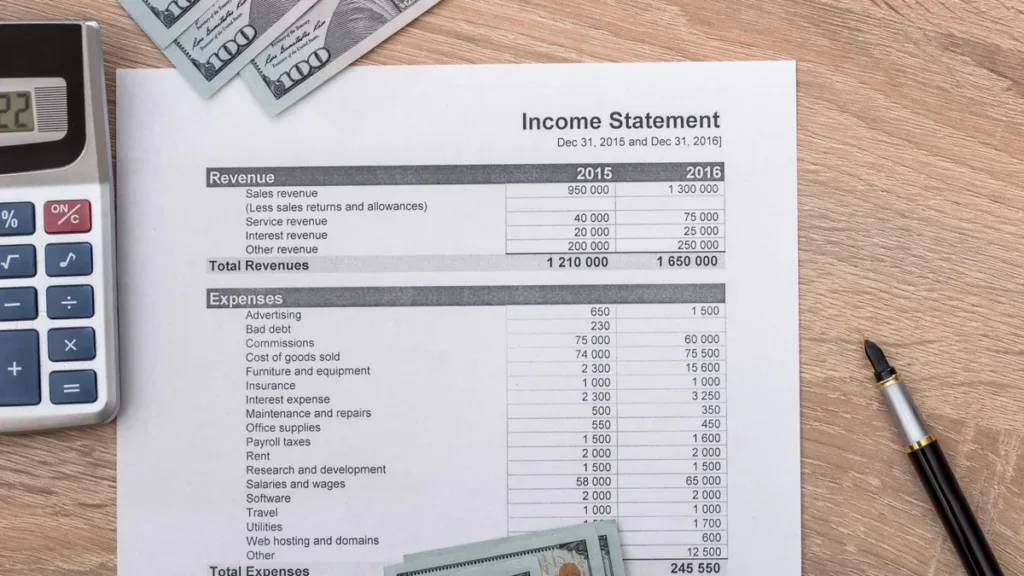
A Complete Income Statement Example
Consider a small Fort Mill business with the following annual results:
| Income Statement Item | Amount |
| Total revenue | $200,000 |
| Cost of goods sold | ($80,000) |
| Gross profit | $120,000 |
| Operating expenses | ($90,000) |
| Operating income | $30,000 |
| Interest expense | ($5,000) |
| Income tax expense | ($5,000) |
| Net profit | $20,000 |
In this example, the business generated $200,000 in revenue but ultimately earned $20,000 in net profit.
The other $180,000 was absorbed by direct costs, operating expenses, interest, and taxes.
The income tax expense is included for illustration. Actual tax reporting varies depending on the business structure.
Understanding Net Profit Margin
Net profit margin measures how much profit remains from each dollar of revenue.
Net Profit Margin = (Net Profit ÷ Revenue) × 100
For this example:
$20,000 ÷ $200,000 × 100 = 10%
The business earns 10 cents in net profit for every dollar of revenue.
A higher profit margin generally means the company retains more of its sales after expenses.
However, appropriate margins vary by industry, business model, and company size.
Can a Business Have Strong Sales but Report a Net Loss?
Yes.
A business might generate $150,000 in revenue while recording $165,000 in total expenses.
Its net loss would be $15,000.
This can happen when product costs rise, operating expenses grow, sales prices are too low, or the company incurs unusual expenses.
A loss during one period does not automatically mean a business is failing, but recurring losses deserve attention.
How to Compare Income Statements Over Time
One of the most useful ways to understand how to read an income statement is to compare reports from different periods.
A single income statement shows what happened during one month, quarter, or year.
Multiple statements reveal whether financial performance is improving or declining.
Example: Comparing Two Years
| Financial Item | Year 1 | Year 2 |
| Revenue | $150,000 | $180,000 |
| Cost of goods sold | $60,000 | $81,000 |
| Gross profit | $90,000 | $99,000 |
| Operating expenses | $65,000 | $76,000 |
| Operating income | $25,000 | $23,000 |
| Net profit | $20,000 | $17,000 |
At first glance, Year 2 looks successful because revenue increased by 20%.
However, the company’s net profit declined from $20,000 to $17,000.
What happened?
The cost of goods sold and operating expenses increased enough to reduce profitability.
Gross profit increased in dollar terms, but gross profit margin fell from 60% to 55%.
The business generated more sales without keeping as much profit from each dollar earned.
This is exactly the kind of insight an income statement comparison can provide.
What Should Business Owners Compare?
Owners should pay attention to changes in revenue, direct costs, gross profit margin, operating expenses, operating income, and net profit.
They should also consider whether the business experiences seasonal fluctuations.
For example, a landscaping company may earn more revenue during spring and summer than during winter.
Comparing July against January might not provide a fair picture of performance.
Comparing July this year against July last year may be more useful.
Consistent accounting methods and comparable reporting periods make these comparisons more meaningful.
What Warning Signs Should Business Owners Watch For?
Income statements can reveal financial patterns that deserve closer investigation.
Not every unusual number represents a serious problem, but certain trends should not be ignored.
Revenue Is Growing, but Profit Is Shrinking
Increasing sales should generally support profitability when costs are managed appropriately.
If revenue rises while net profit falls, expenses may be increasing faster than sales.
Cost of Goods Sold Keeps Increasing
Rising direct costs can reduce gross profit margins.
This might result from more expensive materials, labor increases, supplier price changes, or inefficient production processes.
Operating Expenses Are Growing Too Quickly
Business owners should investigate whether increased overhead is justified by business activity.
For example, adding administrative costs without corresponding operational benefits may put pressure on profitability.
The Business Reports Repeated Net Losses
One unprofitable month may result from seasonal fluctuations or unusual circumstances.
However, repeated losses can indicate pricing problems, excessive costs, or insufficient revenue.
Profit Depends on One-Time Income
A business may report positive net income because of a gain unrelated to regular operations.
If operating income remains weak, the reported profit may not reflect sustainable performance.
These warning signs help owners identify questions worth investigating rather than making assumptions based on a single figure.
Common Income Statement Mistakes
Misinterpreting financial information can lead to poor business decisions.
Here are several common mistakes small business owners should avoid.
Mistake 1: Confusing Revenue With Profit
Revenue represents sales or service income before expenses.
Profit represents what remains after relevant costs have been deducted.
A business generating $500,000 in revenue is not necessarily more profitable than one generating $250,000.
Mistake 2: Assuming Profit Equals Cash in the Bank
An income statement does not directly show how much cash is available.
Under accrual accounting, some revenue may remain unpaid while certain expenses may not yet require payment.
The cash flow statement and balance sheet provide additional information about available resources and obligations.
Mistake 3: Recording Loan Proceeds as Revenue
Borrowed money generally creates a liability rather than business revenue.
Similarly, repayment of loan principal is not typically an income statement expense, although interest generally is.
Incorrectly classifying loan transactions can distort reported profit.
Mistake 4: Putting Expenses in the Wrong Categories
Recording direct production costs as general operating expenses can make gross profit appear higher than it should.
Although the final net profit may remain unchanged, the incorrect classification can make business performance harder to evaluate.
Mistake 5: Ignoring Small, Recurring Expenses
Software subscriptions, administrative costs, and other recurring payments may appear insignificant individually.
However, their combined impact can reduce annual profitability.
Mistake 6: Reviewing Only the Bottom Line
Net profit is important, but it does not explain every financial change.
Business owners should also examine revenue, gross profit, operating expenses, and operating income to understand why profitability changed.
Mistake 7: Comparing Inconsistent Reporting Periods
Comparing a one-month income statement with a three-month statement can produce misleading conclusions.
Reports should cover comparable periods and use consistent accounting methods whenever possible.
Financial Reporting Support in Fort Mill
Understanding how to read an income statement helps small business owners recognize financial trends and make more informed decisions.
However, an income statement is only as useful as the information used to prepare it.
Missing transactions, inconsistent expense classifications, and outdated records can make profitability difficult to evaluate.
At Abacus Tax & Books, we understand that business owners in Fort Mill need more than a collection of financial numbers. They need organized, reliable information that helps them understand how their businesses are performing.
Our team provides bookkeeping and financial reporting support to help small businesses maintain accurate records and better understand their revenue, expenses, and overall financial performance.
Whether a business is reviewing monthly profitability, monitoring rising expenses, or preparing for future growth, dependable financial records create a stronger foundation for informed decisions.
Contact Abacus Tax & Books today to learn how our bookkeeping and financial reporting services can help your Fort Mill business stay organized and gain a clearer picture of its financial performance.
FAQs About Reading an Income Statement
1. What is the easiest way to read an income statement?
Start at the top with total revenue, then review cost of goods sold, gross profit, operating expenses, operating income, and net profit. Each section shows how expenses affect the amount the business ultimately earns. Comparing these figures over time can help identify changes in financial performance.
2. What are the three main parts of an income statement?
The three broad components are revenue, expenses, and profit or loss. Revenue shows what the business earns, expenses show the costs associated with running the business, and profit or loss shows the remaining financial result after expenses are deducted.
3. Is an income statement the same as a profit and loss statement?
Yes. An income statement and a profit and loss statement generally refer to the same financial report. Both summarize revenue, expenses, and profit or loss over a specific accounting period. Business owners may also see the report called a P&L.
4. What is the difference between gross profit and net profit?
Gross profit is revenue minus the direct costs of producing or delivering goods and services. Net profit is the amount remaining after all applicable expenses, including operating costs, interest, and income taxes, have been deducted. Gross profit focuses on direct profitability, while net profit reflects the overall financial result.
5. Can an income statement show a profit even when the business has no cash?
Yes. Under accrual accounting, revenue may be recorded before customers pay their invoices. A company can therefore report a profit while experiencing cash shortages. Reviewing the cash flow statement and balance sheet alongside the income statement provides a more complete understanding.
6. How often should small businesses review their income statements?
Many small businesses benefit from reviewing income statements monthly. Regular reviews can help owners monitor revenue, identify unusual expenses, and recognize changes in profitability. Quarterly and annual comparisons can also provide useful insight into longer-term performance.
7. What does a negative net income mean?
Negative net income means the business recorded a net loss during the reporting period. Its total expenses and losses exceeded its revenue and gains. A temporary loss may result from seasonal activity, startup costs, or unusual expenses, but repeated losses should be investigated.
Understanding What Your Income Statement Says About Your Business
An income statement is more than a record of money earned and spent. It helps business owners understand whether their operations are profitable and how financial performance changes over time.
Revenue shows what the company earns. Cost of goods sold reveals direct costs. Gross profit shows what remains before operating expenses, while operating income and net profit provide additional measures of profitability.
Learning how to read an income statement allows small business owners to look beyond sales figures, identify financial trends, and make decisions based on a clearer understanding of their company’s performance.
With accurate records and regular reviews, this financial statement can become a valuable part of managing a healthier, more sustainable business.