
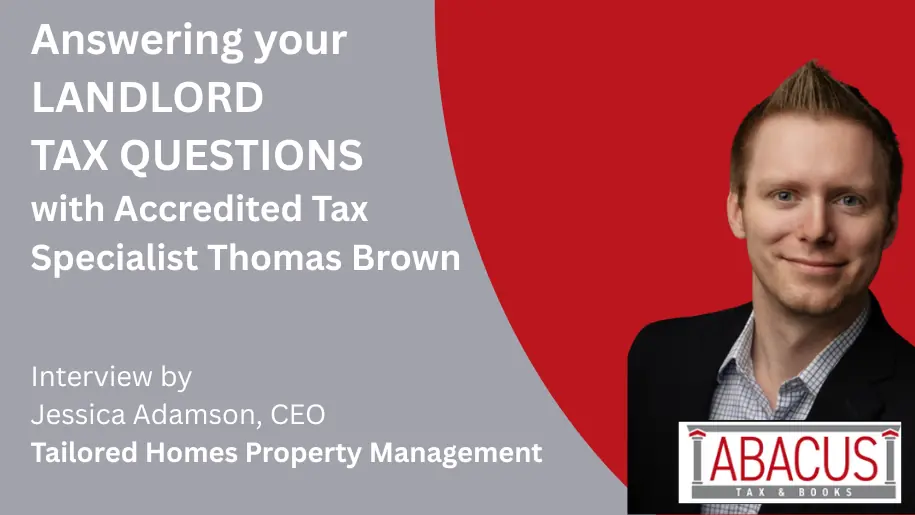
Answering your LANDLORD TAX QUESTIONS
Landlord Tax Questions: A Tax Professional Answers the Most Common Rental Property Tax Issues
An interview with Thomas Brown, Accredited Tax Preparer & Owner of Abacus Tax and Books (Fort Mill, SC)
By Jessica Adamson, Tailored Homes Property Management
Tax season brings up the same big questions for many rental property owners: What’s deductible? What counts as income? Am I doing this right? To help demystify the process, Tailored Homes Property Management sat down with Thomas Brown, Accredited Tax Preparer, owner of Abacus Tax and Books in Fort Mill, South Carolina, to answer the most common landlord tax questions.
The information provided herein is for informational purposes only and should not be construed as tax advice. Please consult your tax advisor for guidance specific to your financial situation.
Q: Thomas, let’s start simple. What do landlords most often misunderstand about taxes?
Thomas: The biggest misconception is that rental income is somehow treated differently or more casually. In reality, all rental income must be reported — not just monthly rent, but also things like late fees, pet rent, application fees, and any portion of security deposits you keep.
Q: Are there types of income landlords commonly forget to report?
Thomas: Yes. Prepaid rent is a big one — if a tenant pays you for future months, it’s still income in the year you receive it. Also, if a tenant provides services in exchange for rent, that value is still considered taxable income.
Q: On the flip side, what are the most valuable deductions for landlords?
Thomas: Most landlords can deduct:
- Mortgage interest
- Property taxes
- Insurance
- Repairs and maintenance
- Property management fees
- Utilities paid by the owner
- Advertising and leasing costs
- Travel related to the property
- And depreciation, which is one of the most powerful tax benefits
Depreciation allows rental property owners to deduct the cost of the property over 27.5 years Under IRC section 168 for residential rental units.
Q: Repairs vs improvements always seem confusing. Can you explain the difference?
Thomas: This is one of the most common mistakes I see.
- Repairs (fixing a leak, replacing a broken window) are fully deductible in the year you pay for them.
- Improvements (new roof, kitchen renovation, room additions) must be depreciated over time, as defined in IRC Section 263
If it extends the life of the property or increases its value, it’s probably an improvement.
Q: What happens if a landlord’s expenses exceed their rental income?
Thomas: That creates a rental loss. Depending on income level and tax status, that loss may be used to offset other income or carried forward.
Q: How do most landlords report rental income?
Thomas: Most use Schedule E with their personal tax return.
Q: What are the biggest mistakes you see landlords make?
Thomas: Three main ones:
- Poor record keeping
- Mixing personal and rental expenses
- Waiting until tax season to organize everything
The landlords who have the easiest tax seasons are the ones tracking income and expenses monthly.
Q: When would you recommend using a professional property manager, and are there any tax implications?
Thomas: I usually recommend a professional property manager when an owner values their time, owns multiple properties, lives out of the area, or simply doesn’t want the day-to-day stress of self-managing. From a tax perspective, there are several important considerations.
First, property management fees are generally 100% tax deductible as an operating expense, which means owners can often offset a meaningful portion of that cost through tax savings. In addition, professional managers typically provide cleaner financial records, which makes tax preparation easier and reduces the risk of errors or missed deductions.
However, there is another important issue owners should be aware of. In some cases, using a professional property manager may impact whether rental activity is considered active or passive for tax purposes Under IRC Section 469. If an owner is no longer materially participating in the management of the property, the income (or losses) may be classified as passive.
That distinction matters because passive losses are subject to different rules and limitations. Depending on an owner’s income level and overall tax situation, it may affect how and when rental losses can be used.
For that reason, I always recommend that owners speak with a Tax Professional before making the switch to professional management, especially if they are currently self-managing and actively involved. Understanding the tax implications ahead of time helps avoid surprises and allows for better long-term planning.
Q: Any red flags that could attract IRS attention?
Thomas: Large deductions without documentation and misclassified improvements.
Q: What’s your top advice for landlords?
Thomas: Treat your rental like a business year-round and work with professionals.
About the Expert:
Thomas Brown, Accredited Tax Preparer is the owner of Abacus Tax and Books in Fort Mill, SC, where his firm provides Tax Preparation and bookkeeping to small and medium businesses. Visit Abacus Tax and Books at https://abacustaxsc.com.
About Tailored Home Property Management
Tailored is a professional property management company that provides hands-on property management services for medium- and long-term residential properties in Fort Mill, Tega Cay, Rock Hill, Lake Wylie, Lancaster and surrounding SC communities. Learn more at www.RentTailored.com.