
Business Expense Categories Every Owner Should Track
Keeping track of business expenses is more than a tax-season task. Consistent expense tracking helps business owners understand where money is going, monitor cash flow, measure profitability, create realistic budgets, and maintain cleaner financial records throughout the year.
The right business expense categories to track will depend on your industry and how your company operates. A contractor may have significant material and vehicle expenses, while a professional services firm may spend more on software and office costs. The goal is not to force every business into the same categories. It is to create a consistent system that accurately reflects how your business spends money.
Why Is Tracking Business Expenses Important?
Accurate expense tracking gives you a clearer picture of your company’s financial performance.
If expenses are missing, incorrectly categorized, or mixed with personal purchases, financial reports may not accurately show how the business is performing. Consistent records also make it easier to compare spending from month to month and identify areas where costs are increasing.
Good expense records can support:
- Cash flow management
- Budgeting and forecasting
- Profitability analysis
- Financial reporting
- Tax preparation
- Better-informed business decisions
Keeping organized records throughout the year can also reduce the amount of cleanup required when financial statements or tax information are needed. If errors have already accumulated, bookkeeping cleanup services in Fort Mill, SC can help correct inconsistencies and restore more reliable financial records.
What Business Expense Categories Should Every Owner Track?
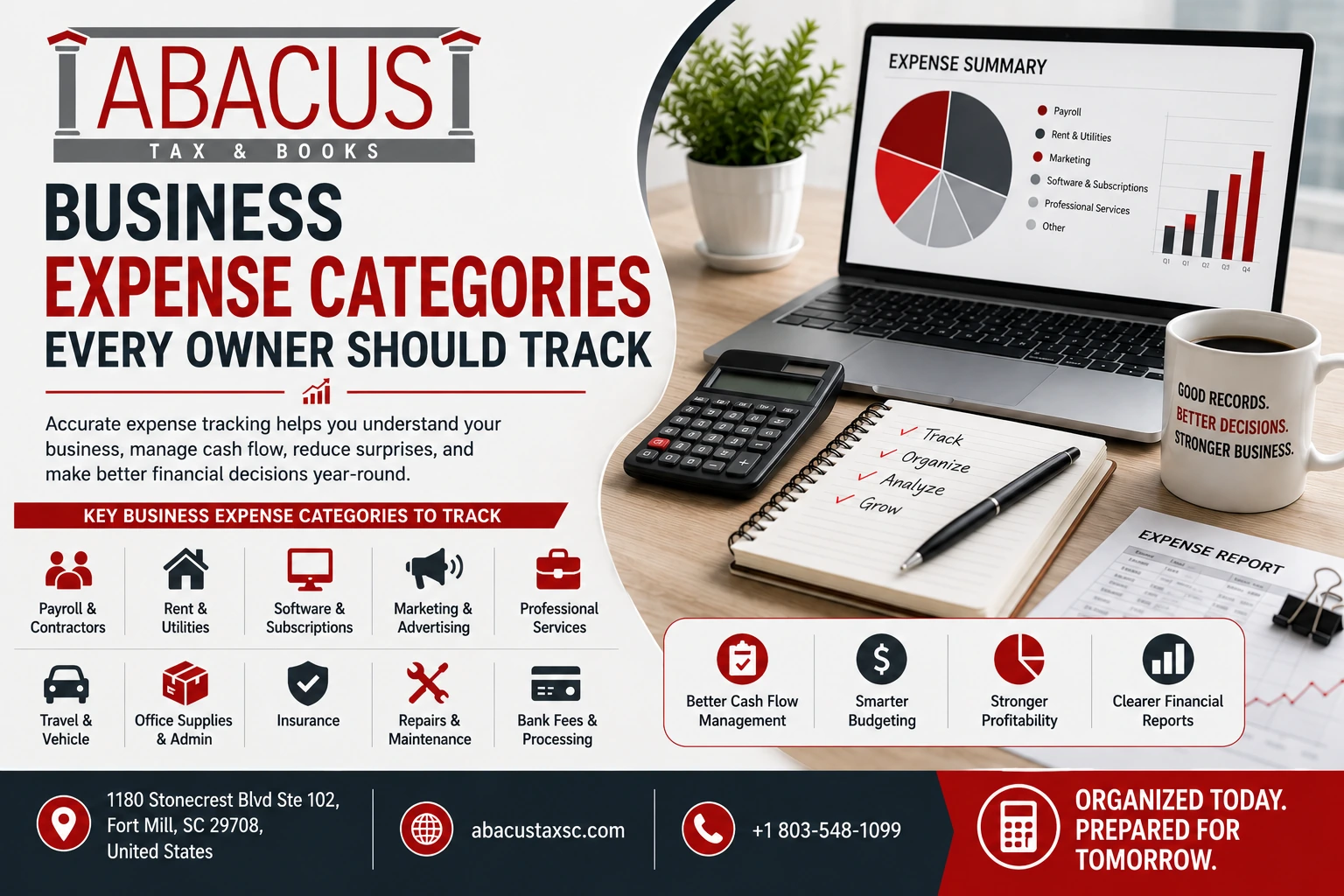
There is no universal list that works perfectly for every company. However, several categories commonly appear in small-business bookkeeping.
These may include:
- Rent or lease payments
- Utilities
- Payroll
- Independent contractors
- Office supplies
- Software and subscriptions
- Professional services
- Insurance
- Marketing and advertising
- Business travel
- Vehicle expenses
- Equipment
- Repairs and maintenance
- Banking and payment-processing fees
Your categories should be specific enough to provide useful financial information without making your bookkeeping unnecessarily complicated.
A professional [Bookkeeping] service can help establish categories that reflect how your particular business operates.
How Should You Track Office and Administrative Expenses?
Office and administrative costs can include routine expenses required to keep a business operating.
Examples may include office supplies, postage, printing, telephone services, internet expenses, rent, utilities, and certain administrative subscriptions.
Consistency matters when recording these purchases. If the same type of expense is classified as “office supplies” one month and “miscellaneous” the next, reviewing annual spending becomes more difficult.
Avoid Overusing a Miscellaneous Category
A miscellaneous category can be useful for occasional expenses that genuinely do not fit elsewhere, but it should not become the default destination for transactions you have not reviewed.
If miscellaneous spending grows significantly, examine the transactions and determine whether additional categories would make your financial reports more useful.
How Should Payroll and Contractor Costs Be Categorized?
Employee payroll and independent contractor payments should be tracked separately.
Payroll can involve wages or salaries along with other employer-related costs. Contractor payments represent payments to individuals or businesses providing services without being treated as employees.
The distinction is important for accurate bookkeeping and may also have tax and reporting implications.
Business owners should avoid deciding that someone is a contractor simply because that arrangement seems easier. Worker classification involves specific circumstances and rules, so questions about whether someone should be treated as an employee or independent contractor should be discussed with an appropriate tax or payroll professional.
How Should Marketing and Advertising Expenses Be Tracked?
Marketing costs can come from many sources, especially when a business uses both traditional and digital advertising.
Your marketing category might include expenses associated with:
- Online advertising
- Printed promotional materials
- Website-related marketing
- Sponsorships
- Direct-mail campaigns
- Social media advertising
- Branding materials
- Marketing agencies or consultants
Tracking these expenses consistently makes it easier to see how much the business is investing in customer acquisition and promotion.
Some businesses may benefit from creating subcategories for major marketing channels. Others may only need one broader advertising category. The appropriate level of detail depends on how you use the information.
How Should Business Travel and Vehicle Expenses Be Organized?
Travel and vehicle expenses require careful recordkeeping because business and personal activity can sometimes overlap.
Business travel may involve transportation, lodging, and other costs connected with qualifying business trips. Vehicle-related records may include costs associated with business use of a vehicle.
Keep Business and Personal Activity Separate
Do not assume that every vehicle or travel expense is a business expense simply because you own a company.
Maintain documentation showing the business purpose of relevant expenses and separate personal activity from business activity. The specific tax treatment of travel and vehicle expenses depends on applicable rules and individual circumstances.
A tax professional can help determine what documentation is required and which costs may qualify for tax purposes.
How Should Equipment, Software, and Technology Costs Be Tracked?
Technology has become a significant expense category for many businesses.
Common costs can include:
- Bookkeeping software
- Customer relationship management systems
- Cloud storage
- Business applications
- Website tools
- Computers and monitors
- Mobile devices
- Printers
- Specialized equipment
Recurring software subscriptions may be handled differently in your records from larger equipment purchases.
Significant purchases can sometimes require different accounting or tax treatment than ordinary operating expenses. Rather than automatically categorizing an expensive piece of equipment as a routine expense, make sure it is recorded appropriately.
Which Business Expenses May Be Tax Deductible?
Some legitimate business expenses may qualify for tax deductions, but recording an expense in your bookkeeping system does not automatically make it deductible.
Bookkeeping and tax treatment are related but different considerations.
The appropriate tax treatment depends on factors such as the nature of the expense, its business purpose, applicable tax rules, and your company’s circumstances.
This distinction is one reason organized bookkeeping is valuable. Clear records give your tax professional better information to evaluate when preparing returns and determining how particular transactions should be treated.
Business owners who need coordinated financial recordkeeping and tax support can learn more through [Bookkeeping & Taxes].
What Are the Best Methods for Tracking Business Expenses?
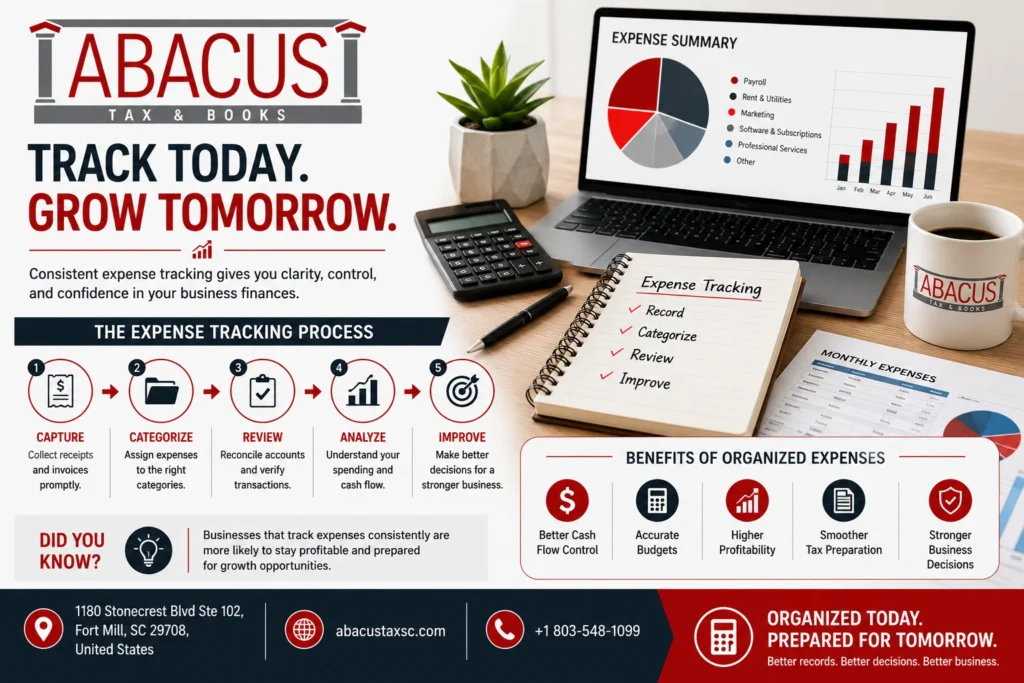
A reliable expense-tracking system does not need to be complicated, but it should be consistent.
Use Dedicated Business Accounts
Keeping business banking and credit-card activity separate from personal finances makes transactions easier to identify and reconcile.
Use Bookkeeping Software
Accounting or bookkeeping software can help organize transactions into consistent categories and generate reports. Automation can save time, but transactions should still be reviewed for accuracy.
Understanding cash vs accrual accounting for small businesses can also help owners determine when income and expenses should be recorded and how those transactions will appear in financial reports.
Save Supporting Documentation
Maintain receipts, invoices, statements, and other appropriate documentation in an organized system. Digital storage can make records easier to retrieve later.
Reconcile Accounts Regularly
Compare bookkeeping records with bank and credit-card statements. Regular reconciliation helps identify missing, duplicated, or incorrectly recorded transactions before they accumulate.
What Expense-Tracking Mistakes Should Business Owners Avoid?
One of the biggest problems is waiting too long to update the books.
Trying to reconstruct months of expenses at once can make it harder to remember the purpose of individual transactions or locate missing documentation.
Other common mistakes include:
- Mixing personal and business expenses
- Losing receipts
- Categorizing similar purchases differently
- Putting too many expenses under “miscellaneous”
- Failing to reconcile accounts
- Recording contractor payments as payroll or vice versa
- Automatically assuming every business-related payment is tax deductible
- Failing to review recurring subscriptions and fees
A consistent monthly process is generally easier to manage than a major cleanup at year-end.
When Can a Bookkeeper Help Organize Business Expenses?
A bookkeeper can be useful when transaction volume increases, categories become inconsistent, reconciliations fall behind, or financial reports no longer provide a clear picture of the business.
Professional bookkeeping can help organize transactions, maintain consistent categories, reconcile accounts, and prepare financial records that owners can actually use.
For businesses expanding beyond one location, bookkeeping services for multi-state operations can also help maintain consistent expense categories and reporting across different jurisdictions.
For businesses in the Fort Mill area, can provide local support for keeping financial records organized throughout the year.
At Abacus Tax & Books, we believe bookkeeping should do more than prepare a business for tax season. Well-maintained records can give owners a clearer understanding of what their businesses earn, spend, and retain.
FAQs
What counts as a business expense?
A business expense is generally a cost associated with operating a business. Its accounting and tax treatment depends on the nature and purpose of the transaction.
What are the most common business expense categories?
Common categories include payroll, contractors, rent, utilities, supplies, insurance, marketing, software, professional services, travel, vehicle costs, equipment, maintenance, and banking fees.
Should every business use the same expense categories?
No. Expense categories should reflect the company’s industry, operations, and reporting needs. A useful chart of accounts should provide meaningful information without becoming unnecessarily complicated.
How often should business expenses be recorded?
Expenses should be recorded consistently rather than allowed to accumulate for long periods. Many businesses review and reconcile their financial records at least monthly.
Do businesses need to keep receipts?
Businesses should maintain appropriate documentation supporting their transactions. The specific records required can depend on the expense and applicable tax or accounting requirements.
Can I use the same account for business and personal expenses?
Separating business and personal finances generally makes bookkeeping, reconciliation, and tax preparation much clearer. Dedicated business accounts can reduce confusion and improve recordkeeping.
Are all business expenses tax deductible?
No. An expense appearing in your bookkeeping records is not automatically deductible. A qualified tax professional can determine how specific expenses should be treated for tax purposes.
When should I hire a bookkeeper?
Consider professional bookkeeping when keeping records consistently becomes difficult, reconciliations are falling behind, expense categories are unclear, or you need more reliable financial information for business decisions.
Turn Everyday Expenses Into Better Financial Visibility
Every transaction tells part of the story of your business. When expenses are categorized consistently and supported by organized records, it becomes easier to understand cash flow, monitor profitability, prepare for taxes, and make informed financial decisions.
At Abacus Tax & Books, we help business owners turn everyday transactions into organized, useful financial records. If your expenses have become difficult to manage or your books need more consistent attention, our team can help establish a bookkeeping process that keeps your financial information clearer throughout the year.
Contact Abacus Tax & Books to discuss your bookkeeping needs and build a more organized foundation for your business finances.